
Cost & Planning
Subfloor Repair: The Problem Under the Problem
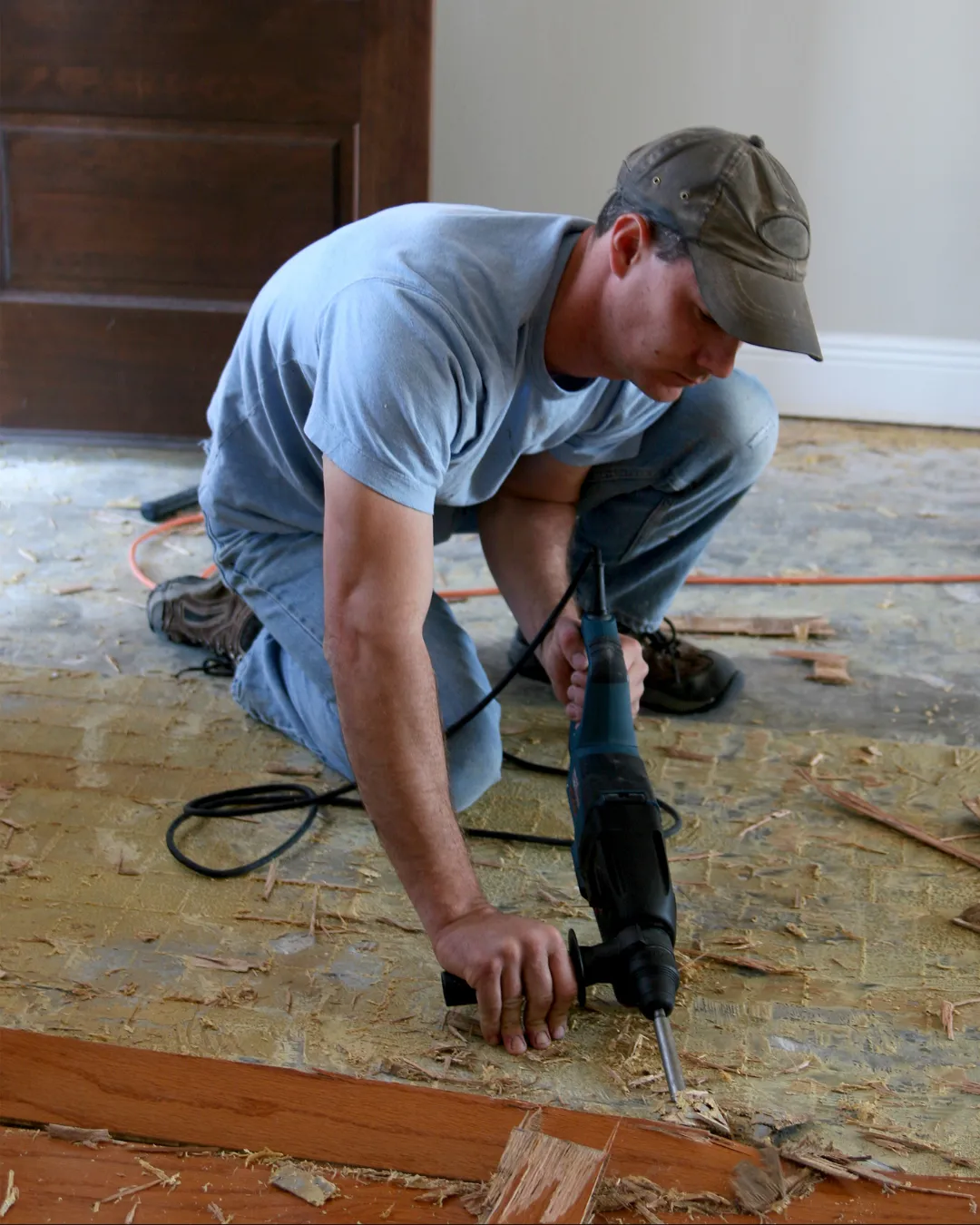
Homeowners call us about the floor they can see. Often the actual problem is the layer underneath it. A soft spot, a bouncy patch, a floor that has started to squeak in one place — these are almost never the flooring itself, and covering them with new material does not fix them. Here is what subfloor damage looks like and why it has to be handled first.
What the subfloor does
The subfloor is the structural sheet material — typically plywood or OSB — fastened across the joists. It is what your flooring is attached to or resting on, and it carries the actual load of the house.
Everything about how a finished floor performs traces back to it. If the subfloor is not flat, the flooring above telegraphs every dip. If it is not sound, the floor moves and squeaks. If it is wet, whatever goes over it is on borrowed time.
The signs, and what they mean
Most subfloor problems announce themselves well before they become emergencies.
- ✓Soft or spongy spots underfoot — the sheet material has lost structural integrity, almost always from moisture
- ✓Bounce or noticeable deflection when walking, which can indicate subfloor damage or a joist issue beneath it
- ✓Squeaks in one specific area, usually a loose panel moving against a joist or a fastener that has backed out
- ✓Visible dips or high spots that show through the finished floor
- ✓Tile that has cracked or grout lines that keep failing, which nearly always means movement underneath rather than bad tile
- ✓A musty smell with no visible source, which is worth taking seriously
What causes it in North Carolina homes
Moisture, in nearly every case, and this area supplies it from a few directions.
Plumbing leaks are the classic cause — a toilet flange seeping slowly, a supply line weeping behind a vanity, a dishwasher or refrigerator line that leaks a little at a time. Slow leaks do far more subfloor damage than dramatic ones, because nobody finds them for months.
Crawl spaces are the specifically local factor. A great many homes here sit over crawl spaces, and a crawl space that is poorly sealed, poorly ventilated, or has standing water after heavy rain pushes moisture up into the subfloor continuously. There is no spill and no visible event — the subfloor just slowly degrades from below. In a humid climate this is a genuine ongoing mechanism rather than a rare failure.
Bathrooms are the most common single location, because they combine plumbing, standing water, and humidity in one room.
Why it has to be fixed before new flooring
This is the part worth being blunt about. Installing new flooring over a compromised subfloor wastes the flooring.
A soft subfloor cannot hold fasteners, so nailed or stapled floors do not stay put. It flexes, which cracks tile and grout and separates the seams of floating floors. It telegraphs unevenness through whatever goes over it. And if the moisture source has not been found and stopped, the damage keeps progressing under a brand new floor.
The worst version is discovering it on install day, after the old flooring comes up and the material is already bought. That is why we look during the measure rather than during demolition — so it is priced in rather than becoming a surprise change order.
What the repair involves
Straightforward in principle, and the order matters.
Find and stop the moisture source first. Repairing a subfloor without fixing what wet it just resets the clock. Then the damaged sections get cut out and replaced with matching-thickness material, fastened properly into the joists. Joists themselves get checked, since prolonged moisture that destroyed a subfloor has often reached the framing beneath it.
Then the surface is brought flat — high spots ground down, low spots filled — so the new flooring has something true to sit on. Only then does flooring go down.
Often the damage is far more contained than homeowners fear. A bathroom subfloor repair around a toilet flange is a common, manageable job, not a whole-house event.
Have it looked at before you buy flooring
If your floor has a soft spot, a bounce, or a squeak that has appeared recently, the useful sequence is to have someone look at what is underneath before you pick out material. It changes both the scope and the number, and finding out early is always cheaper.
We repair subfloors across Angier, Fuquay-Varina, Garner, Holly Springs, Willow Spring and the surrounding area, and we will give you an honest read on whether it is a contained repair or something larger. Get a free estimate and we will take a look.
Ready To Plan Your Floors?
Get a free in-home or in-store consultation with our Angier team. We match the right product to every room and back it with a 100% satisfaction guarantee.
Get My Free Estimate