
Buying Guide
Tile Installation: What Separates a Floor That Lasts
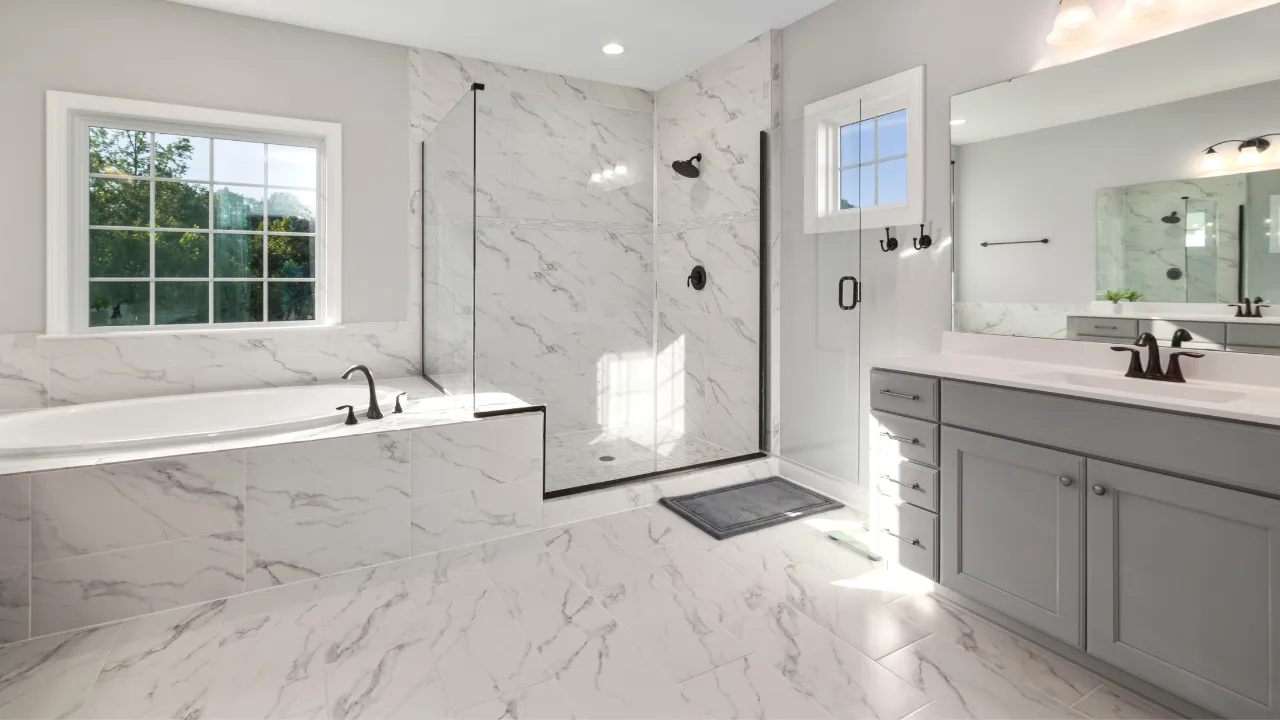
Tile is the most durable floor you can put in a house and the one most often installed badly. The material itself is close to indestructible; what fails is everything underneath and between. If you are comparing tile quotes, almost the entire difference between them is in work you will never see.
The substrate decides everything
Tile is rigid and does not bend. When whatever it is bonded to moves, something has to give, and it gives at the grout line or through the tile.
That means the subfloor has to be stiff enough not to deflect underfoot, and flat enough that every tile sits in full contact with the adhesive beneath it. A tile bridging a dip is supported at its edges and hollow in the middle, which is exactly how a tile cracks under a dropped pan.
Uncoupling and waterproofing membranes
Over a wood subfloor, an uncoupling membrane sits between the substrate and the tile and allows small amounts of movement without transmitting it to the tile. Wood subfloors move with humidity, and in central North Carolina they move a measurable amount across the year. This is the layer that absorbs it.
In a wet area, a waterproofing membrane is separate and non-negotiable. Tile and grout are not waterproof — they are the wearing surface over the thing that is. Where a shower or a bathroom floor is involved, the membrane and how it is detailed at the corners and the drain is the actual job.
- ✓Uncoupling membrane: absorbs substrate movement so the tile does not crack.
- ✓Waterproofing membrane: keeps water out of the structure in wet areas.
- ✓Movement joints: give a large floor somewhere to expand.
- ✓Full adhesive coverage: no hollow spots under any tile.
Movement joints
A large tiled area needs somewhere to expand, and where it meets a wall or another material it needs a flexible joint rather than a rigid grout line.
This is a detail that gets skipped because it looks like nothing, and it is the reason tiles tent or crack in a straight line across a large floor a year after installation. Open-plan areas need it most and get it least.
Grout, sealing and colour
Grout choice matters more than most people are told. Cementitious grout needs sealing and will absorb what gets spilled on it; epoxy grout does not, but it is harder to work with and costs more. In a kitchen or a family bathroom, the upgrade is usually worth it.
Colour is worth thinking about practically as well as aesthetically. A grout much lighter than the tile shows every mark in a traffic path. A grout much darker frames every tile and makes a floor read busier. Mid-tone grout close to the tile colour is the forgiving choice.
Large-format tile is a different job
Big tiles are popular and they raise the standard for everything underneath. A large tile spans further, so it is less forgiving of an uneven substrate — a dip that a small tile would sit over becomes a rocking, hollow-sounding tile at large format.
They also need more adhesive coverage and a levelling system during installation to keep adjacent tiles flush. If you want large format, expect the preparation line in the quote to be higher, and be suspicious if it is not.
What to ask before you sign
Three questions that a competent installer answers immediately: what is going between the subfloor and the tile, how is the wet area being waterproofed, and where are the movement joints.
A quote that says nothing about any of those is not cheaper. It has simply left out the parts that decide whether the floor is still sound in ten years.
Ready To Plan Your Floors?
Get a free in-home or in-store consultation with our Angier team. We match the right product to every room and back it with a 100% satisfaction guarantee.
Get My Free Estimate